
Why the UK’s Waste Crisis Strengthens the Case Against Unchecked Development


A Growing Crisis We Can No Longer Ignore
Across the UK, environmental waste has become a serious and fast-growing issue. Reports now show a troubling pattern: when waste crimes are reported to the environmental authorities, the response is often ineffective. Why?
Because the work is routinely subcontracted out then subcontracted again, and again until it eventually lands with unregulated operators or, in many cases, criminal groups. The result is predictable: fly-tipping is spreading across our countryside at an alarming rate.
The Hidden Cost of New Housing Developments
Every new development generates a huge volume of construction waste, yet responsible waste facilities are already operating at full capacity.This is especially true in villages like ours.
Where can all this waste go? Too often, the answer is: nowhere sustainable.
As capacity tightens, more waste is pushed down the chain and ends up disposed off by the very operators who are fuelling the fly-tipping crisis.
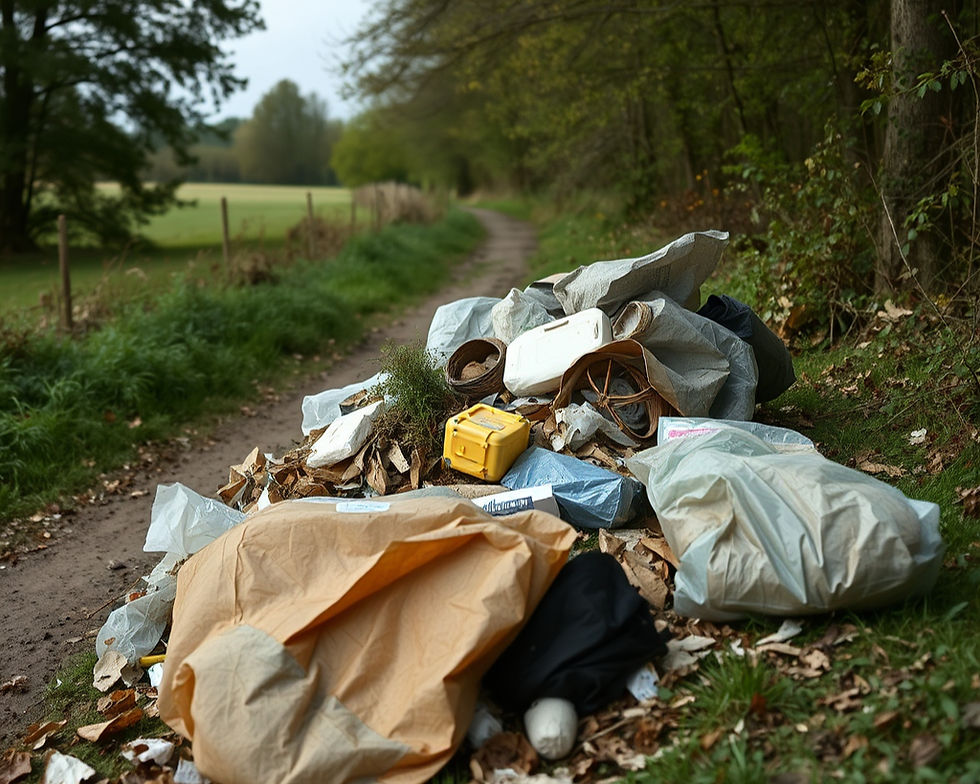
“Despair always comes after the deed is done. Prevention is the only real solution.”
Our Village Is at Breaking Point
We are already under immense pressure from traffic, infrastructure limitations, and the loss of wildlife habitats. Adding more intrusive development, without a functioning waste system to support it is reckless.
Once the hedgerows are torn up, once the soil is compacted, once the wildlife has vanished, the outrage comes too late. The damage is irreversible.
Prevention Must Be Part of the Solution
If we want to protect our landscape, our habitats, and the species who depend on them, then halting unnecessary developments is essential.Protecting our village is not “anti-progress”, it is responsible stewardship.
This is not just about planning. It is about safeguarding a countryside already burdened by waste, mismanagement, and systems stretched beyond their limits.

A Call to Protect What Remains
We stand at a crossroads. We can continue allowing pressures to build until the countryside becomes another casualty of mismanagement. Or we can act now, protect what remains, and insist on responsible, environmentally sound decision-making.
Let’s choose the path that keeps our village and its wildlife safe.


Comments